
Driveways and Access Points That Stay Functional
Culvert Installation in the Tri City Area for driveways, drainage crossings, and property access continuity during heavy rainfall
Danway Excavating & Land Clearing installs culverts for residential and rural properties where water needs to pass under driveways, roads, or access points without washing out gravel or creating impassable conditions. In areas with sloped terrain and seasonal downpours common to Northeast Tennessee, culverts channel streams, drainage ditches, and runoff beneath paved or gravel surfaces so vehicles can cross safely year-round. You'll notice the difference immediately after installation when what used to flood during storms now drains cleanly underneath your driveway.
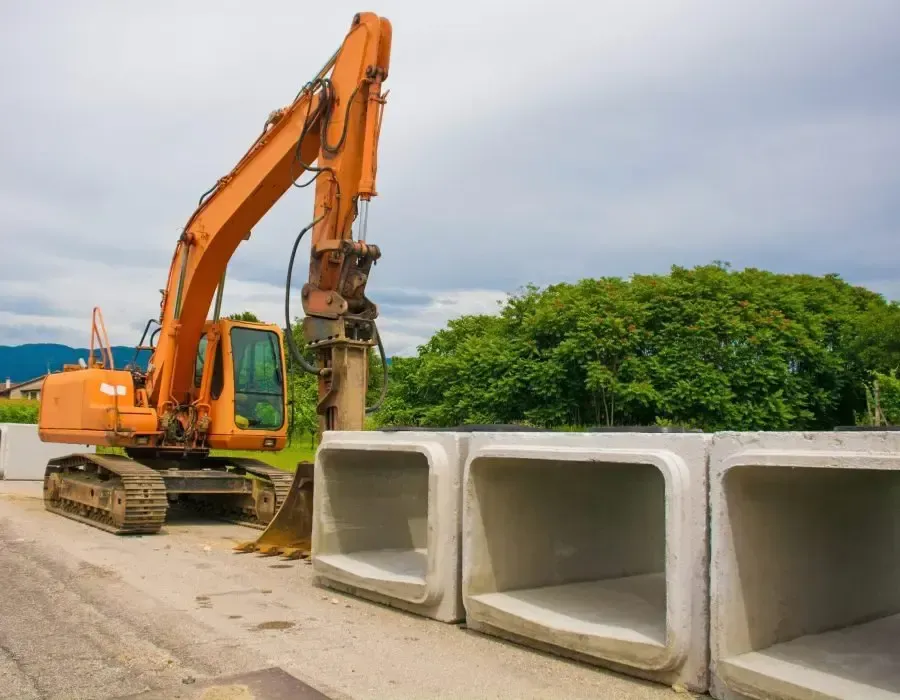
Culvert installation involves excavating the crossing area to the correct depth and slope, positioning the pipe so water flows freely without backing up, then backfilling with compacted material that supports vehicle weight without shifting. The sizing and pitch determine whether water moves through efficiently or pools at the entrance, and grading work on both ends ensures runoff enters and exits without erosion.
Request an on-site evaluation to determine the culvert size and placement based on your property's drainage patterns.
What Proper Culvert Work Requires
The installation begins with assessing the volume of water that moves through the area during peak flow and selecting a culvert diameter that handles that capacity without restriction. Undersized pipes back up and overflow across driveways, while incorrect slope causes sediment to settle inside the pipe and reduce flow over time. Danway Excavating & Land Clearing manages the excavation, grading, and compaction needed to keep the culvert stable under the weight of vehicles and changing weather conditions typical to the region.
Once the culvert is installed and backfilled, your driveway remains passable during rain events that previously turned crossings into washed-out obstacles. Water flows underneath rather than over the surface, and the gravel or pavement above stays in place instead of eroding into channels. Properly installed culverts also prevent standing water on the uphill side, which can saturate embankments and lead to more extensive erosion over time.
Culvert projects often include grading adjustments to direct water into the pipe entrance and stabilize the outlet area where water exits. These steps prevent scouring and ensure the surrounding soil doesn't wash away after installation. For rural properties with multiple drainage crossings, the work may involve coordinating several culvert placements to manage water flow across the entire access route.
Questions Before Installing a Culvert
Property owners in the Tri Cities and surrounding areas often need clarity on how culvert installations protect access points and manage drainage over the long term.
What size culvert does my driveway crossing need?
The diameter depends on the volume of water that flows through the area during heavy rain, with common residential installations ranging from 12 to 24 inches depending on the drainage basin size and slope.
How deep does the excavation need to be?
Depth is determined by the natural grade of the stream or drainage ditch, with the culvert positioned to maintain a consistent downhill slope that keeps water moving without pooling inside the pipe.
What keeps the driveway surface from sinking over the culvert?
Backfill material is compacted in layers around and above the pipe to distribute vehicle weight evenly and prevent settling that creates dips or potholes.
How does culvert installation prevent erosion on my property?
By channeling water underneath the crossing rather than allowing it to flow over the surface, culverts eliminate the scouring action that washes away gravel and soil during storms.
When should I schedule culvert work?
Installation is most efficient during dry periods when the drainage area has minimal water flow, making excavation and compaction easier to complete without weather delays.
Danway Excavating & Land Clearing has served residential and rural properties throughout the region for over 25 years, delivering culvert installations that handle drainage flow and protect access points through changing weather conditions. Schedule a consultation to discuss your property's drainage crossings and receive a detailed installation estimate.