Water Flow Redirected Before Erosion Starts
Drainage in the Tri Cities and surrounding areas for properties experiencing standing water, erosion, and runoff issues on sloped or rural land
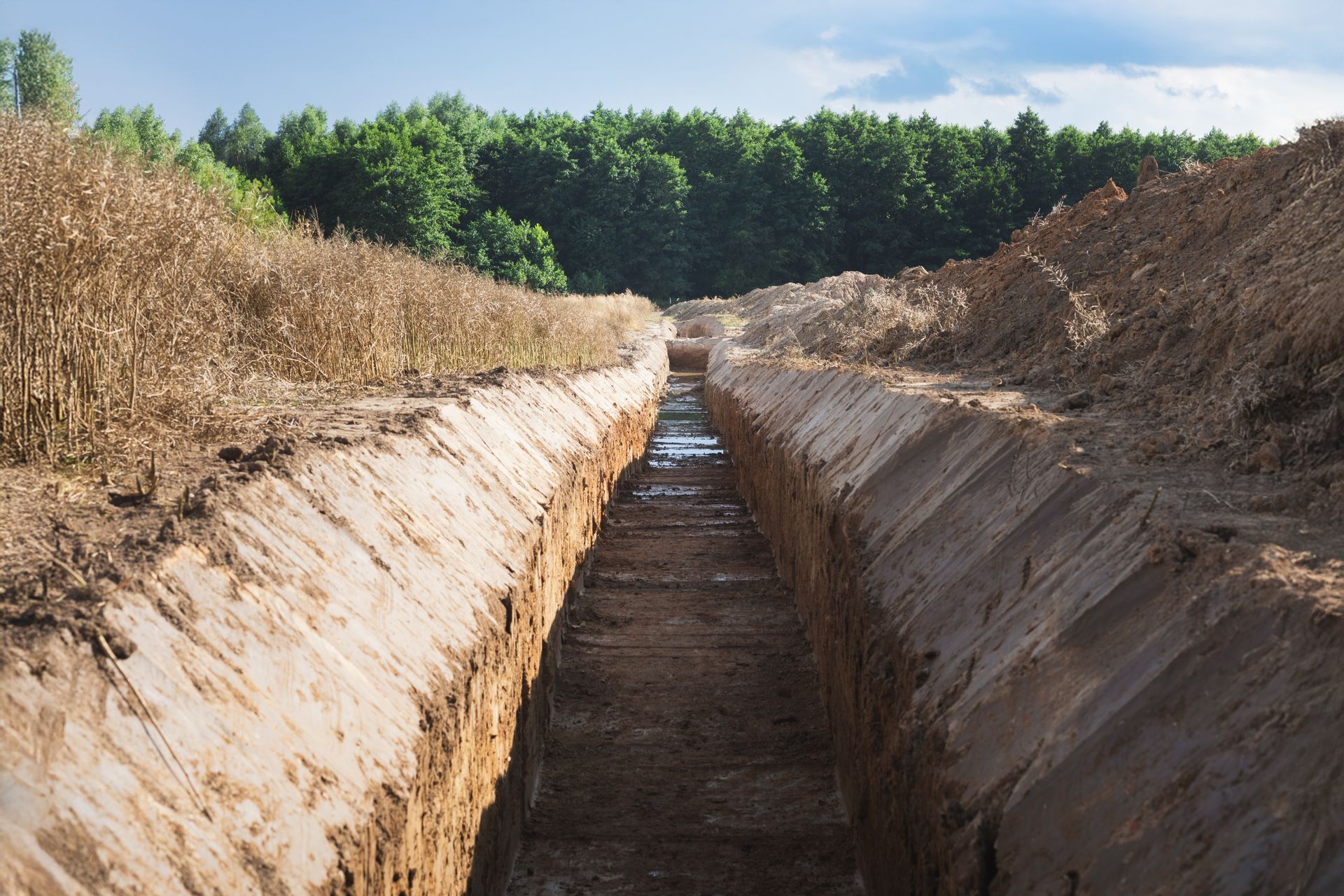
Standing water that lingers for days after rainfall or runoff that cuts channels across your property indicates drainage patterns that need correction through excavation and grading. Proper drainage solutions redirect water away from foundations, driveways, and outdoor spaces before saturation weakens soil structure or erosion removes topsoil. Danway Excavating & Land Clearing evaluates where water collects or flows incorrectly, then excavates swales, adjusts grades, or installs subsurface drainage systems that move water to appropriate discharge points without creating new problems downstream.
Drainage work involves shaping the land to control water movement using gravity, which may include cutting shallow channels that guide runoff, lowering high spots that trap water, or creating outlets where excess flow can exit the property safely. On sloped properties common in Northeast Tennessee, the goal is to slow runoff velocity enough to prevent erosion while still moving water efficiently so it doesn't pool. Grading adjustments are often combined with French drains or catch basins where surface solutions alone can't handle the volume or where subsurface water contributes to saturation problems.
Schedule a drainage evaluation to identify water flow patterns and determine the most effective solution for your property's specific conditions.
What You Notice Once Drainage Work Is Finished
Drainage projects begin by observing where water goes during and after rain events, which reveals whether the issue stems from poor grading, inadequate outlets, or subsurface water that surfaces in low areas. Excavation creates the slopes and pathways needed to redirect flow, and grading ensures water doesn't return to the problem area during future storms. Danway Excavating & Land Clearing tailors each solution to the property's topography and soil characteristics, avoiding one-size-fits-all approaches that fail when conditions don't match assumptions.
After drainage improvements are complete, you'll see water move off your property predictably without leaving behind standing pools or eroded channels. Foundations stay drier, driveways remain stable without washouts, and outdoor areas become usable sooner after storms because water no longer saturates the soil for extended periods. Vegetation grows more consistently in areas that were previously too wet or too dry, and long-term erosion that threatened landscaping or structural elements stops progressing.
Drainage solutions may include multiple components working together, such as grading to direct surface water combined with perforated pipe to capture subsurface flow. These systems are designed to function without ongoing maintenance beyond periodic inspection to ensure outlets remain clear and grades haven't shifted due to settling or landscape changes.
Frequent Questions About Drainage Work
Homeowners dealing with water problems often need to understand what drainage solutions involve and how they protect property over time.
What causes standing water to persist after storms?
Poor grading that creates low spots, compacted soil that prevents absorption, or lack of outlets where water can exit all contribute to pooling that doesn't drain naturally within a reasonable timeframe.
How does excavation fix drainage problems?
Reshaping the land to create positive slope away from structures and toward discharge points allows gravity to move water efficiently, eliminating the conditions that cause it to collect or flow where it damages property.
What is a French drain and when is it needed?
A French drain is a gravel-filled trench containing perforated pipe that captures subsurface water and redirects it, used when surface grading alone can't address water that rises from below or when visible channels aren't desirable.
How does drainage work prevent foundation damage in Greeneville?
Redirecting water away from the foundation perimeter keeps soil from staying saturated, which reduces hydrostatic pressure against basement walls and prevents settling or cracking caused by soil expansion and contraction cycles.
What maintains drainage systems after installation?
Keeping outlets clear of debris and monitoring for erosion at discharge points ensures the system continues functioning, though properly designed drainage requires minimal intervention once the grading and structures are established.
With over 25 years serving homeowners throughout the region, Danway Excavating & Land Clearing delivers drainage solutions designed for long-term property protection through tailored excavation and grading work. Contact us to request a drainage evaluation and receive a free estimate based on your property's water flow challenges.